The Story of the ship Josephine Willis
The Josephine Willis was a mid-19th-century wooden "packet" ship, a vessel designed to provide a regular link between Britain and its distant colonies. Built in 1854 at the Limehouse docks in London by the Fletcher Brothers, she was owned by HH Willis & Co. Her primary purpose was to serve the burgeoning emigrant route between London and New Zealand, carrying passengers seeking a new start and the essential supplies needed to build a life in Auckland and New Plymouth.
A Cargo of the Everyday
Unlike ships carrying gold or high-end luxury goods, the Josephine Willis was laden with utilitarian, everyday crockery. This included mass-produced Staffordshire earthenware—items like chamber pots, simple cups, and plates decorated with standard "Willow" or "Friburg" transfer patterns. These were affordable, "off-the-shelf" goods meant for the kitchens and washrooms of everyday colonists. Because such common items were rarely kept in museum collections, the wreck has become a unique "time capsule" for historians today.
The 1856 Tragedy
Her career was cut short during her second voyage. On February 1, 1856, she cleared London with 110 souls on board. Just two days later, on the evening of February 3, she was navigating the crowded waters of the English Channel near Folkestone.
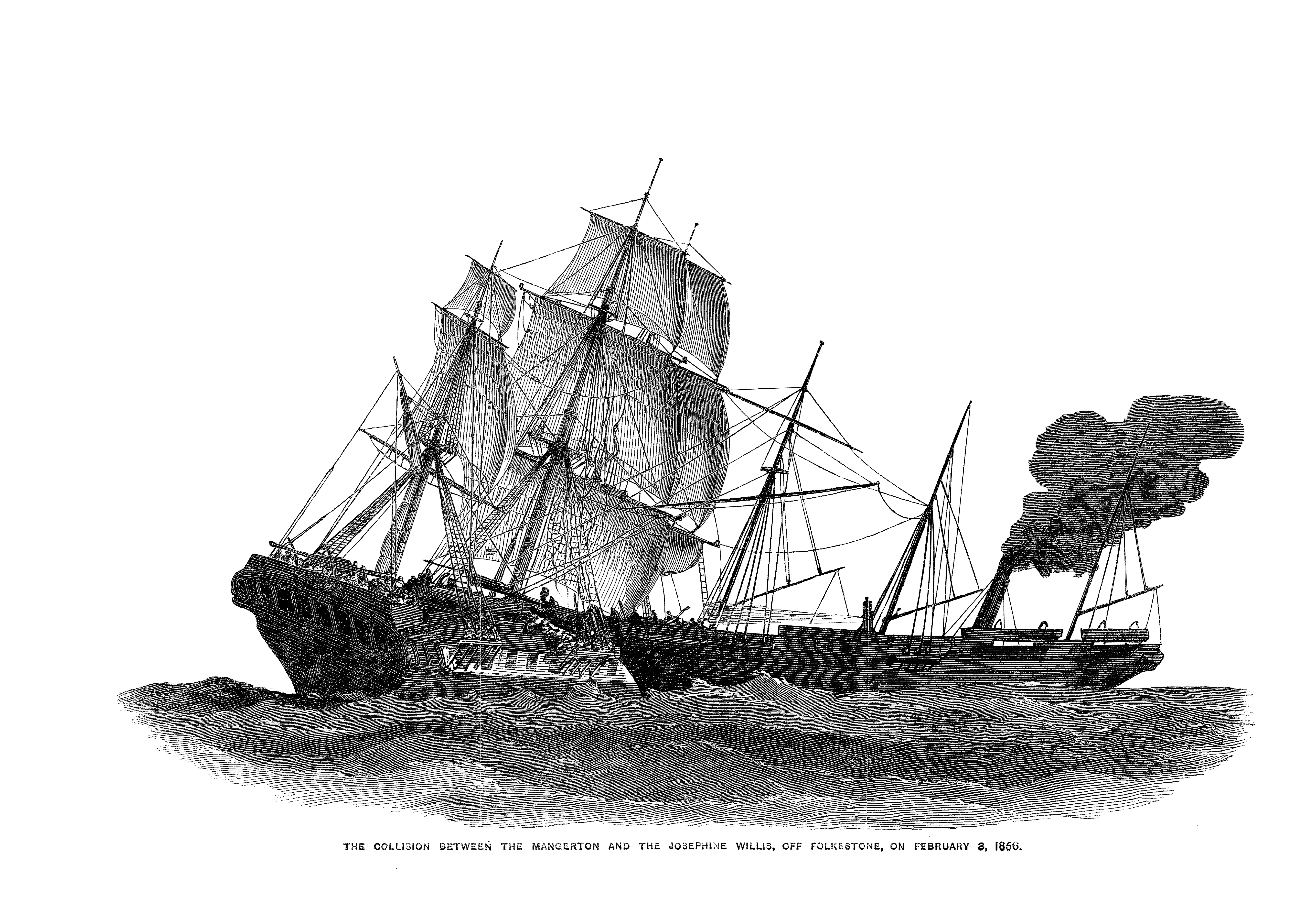
In the darkness, the crew spotted a light they mistakenly identified as the Dungeness Lighthouse. In reality, it was the masthead light of the SS Mangerton, an iron-hulled steamer. The two ships collided with such force that the Josephine Willis was nearly sliced in two. She sank rapidly, claiming the lives of 70 people, including Captain Edward Canney. Today, the wreck is a protected site, preserving a tragic moment in maritime history and a perfectly frozen snapshot of Victorian domestic life.